April 24th, 2019
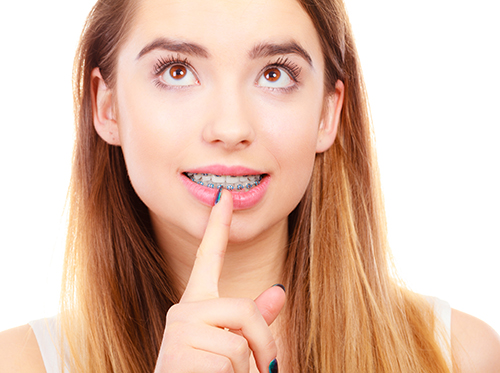
If you’ve visited GSD Orthodontics, then there’s a good chance you’re looking to perfect your smile by straightening your teeth with braces. At some point during your treatment, you may need to use elastics, otherwise known as rubber bands, for a certain period. These are used to apply additional pressure that will move your teeth in the right direction.
Placement of the elastics is specific to each patient’s teeth. These small rubber bands stretch over the tiny loops on both the top and bottom brackets. At first, Dr. Gregory Dyer may recommend you wear the elastics both day and night for an extended time.
You may be told to switch only to nighttime wear once the teeth are set in the correct position. By consistently wearing the elastics, you can shorten the overall time your braces will have to be on.
The elastics are made from medical-grade latex. If you have an allergy to latex, make sure to let Dr. Gregory Dyer know, so you can be given an alternate material. We will show you how to take elastics on and off when they’re given to you at your appointment.
You should remove them when you eat so they don’t become overstretched or break. It’s important not to overstretch the bands, and always to replace them if they break. Eventually it will become a familiar habit to carry the bands around with you for times when this might happen.
The Do’s and the Don’ts
- DO … always wash your hands before removing or replacing the rubber bands.
- DO … call us if you run out of elastics.
- DO … get in the habit of carrying around extra rubber bands as replacements.
- DON’T … double up on elastics because this can exert too much pressure on your teeth and could actually harm the roots.
- DON’T … overstretch the rubber bands or they will lose strength and become ineffective.
If you were recently given elastics as well as your braces, feel free to ask any questions during your appointment, or call our Tampa office any time. Using elastics correctly is one more step in your journey to a perfect smile!
April 17th, 2019

The idea for Earth Day was the brainchild of Gaylord Nelson, a senator from Wisconsin. He envisioned an Earth Day that would be a kind of environmental teach-in. The first Earth Day celebration took place on April 22, 1970, and a surprising 20 million people participated on that day. Ultimately, it became the largest organized celebration in US history.
Earth Day Over the Years
Over the years, the recognition of the day, and the number of people celebrating it all over the world, turned Earth Day into an international celebration. Because it is celebrated throughout the world, it is not only the largest international environmental observation, but it is also more widely celebrated than any other environmental event in the world. Today, Earth Day is celebrated in 175 countries where over 500 million people participate in celebrations.
The Earth Day Movement
The Earth Day movement is credited with developing the idea that people should “think green”. It encouraged congress to enact laws, including one that resulted in the creation of the Environmental Protection Agency. It also inspired the passage of the Endangered Species Act.
The Five R's and Their Importance
- Reduce – Reduce by avoiding unnecessary purchases. Reduce your use of materials that wind up in landfills. Reduce the use of chemicals around your house. Reduce your use of disposable bags, plates, cups, eating utensils, and batteries.
- Reuse – Instead of using plastic bags for your groceries or purchases, bring your own reusable bags. When you go to buy coffee at Starbucks, take a travel mug so you don't have to get your coffee in a disposable paper cup. Instead of storing food in disposable refrigerator containers, buy containers that can be washed and reused. Don't use regular batteries. Whenever possible, opt for rechargeable batteries that you can reuse.
- Recycle – Most cities offer a recycling program to collect used bottles, cans, and newspapers. Recycling includes collecting recyclable materials that would otherwise be considered waste, sorting and processing recyclables into raw materials such as fibers and manufacturing raw materials into new products.
- Re-buy – Make an effort to purchase things that are made through recycling. When purchasing furniture, look for items that are made from reclaimed wood. When buying paper for kids school work, computer printer paper, holiday cards, or anything else, make a point of purchasing recycled paper products. Instead of buying clothing at full retail price, shop for second hand clothing. You will save a lot of money by doing so!
- Rethink – Rethink the way you do things so that you do them in an eco-conscious way at all times. Instead of driving to work alone, consider taking the bus or going in a carpool. Walk or ride your bike when you're only going a short distance. Plan your shopping trips and errand runs so that you can do everything on one day, and do it in a way where you can save time and gas.
Other ways to "think green" include growing your own food, composting yard waste and food scraps, or by participating in local recycling programs. Join a group like Freecycle so you can share your unneeded and unwanted possessions with people who can use them. Likewise, you'll be able to get things you need or want for free.
Earth Day teaches people that the planet belongs to everyone, so everyone is equally responsible for protecting it. Although Earth Day is an environmental celebration, our team at GSD Orthodontics wants to remind you that you don't have to wait until then to make changes that will allow you and your family to live a greener life.
Happy Earth Day from the team at GSD Orthodontics.
April 10th, 2019

Many adults and teens in our Tampa office would love to have their teeth straightened but are unwilling to go through the long and often embarrassing process of wearing traditional metal braces. Invisalign® and Invisalign Teen® clear aligners offer the perfect solution: They’re the most advanced clear aligner systems in the world!
If you’re considering getting braces, there are several reasons why you might want to consider Invisalign clear aligners. Here are some of them:
- You can eat whatever food you like, without worrying about it catching in wires or breaking brackets.
- People won’t likely be able to tell you’re wearing them!
- The aligners can be removed at any time.
- You can brush and floss as you normally would, which helps to maintain better overall oral health.
- Invisalign aligners are made of a smooth BPA-free plastic and are more comfortable to wear than traditional braces. You’ll need to visit our Tampa office less often: only once every six weeks or so.
- With Invisalign Teen, you’ll receive up to six replacements for lost or broken aligners.
Before starting treatment, you’ll have a consultation with Dr. Gregory Dyer to see if Invisalign or Invisalign Teen treatment is right for you. After that, you’ll have X-rays, pictures, and impressions taken of your teeth.
That information will be used to make the 3D models of your teeth that let Dr. Gregory Dyer see how they will move throughout the entire treatment and approximately how long it will take.
You’ll receive your aligners based on the treatment plan we recommend. You’ll get a new set of aligners every two weeks. All you need to do is wear your aligners 22 hours a day and you’ll be on your way to a straighter smile in no time!
Ask a member of our Tampa team for more information about Invisalign clear aligners today!
April 3rd, 2019

The Importance of Facial Protection
Americans from all walks of life should mark April as National Facial Protection Month on their calendars. The American Association of Pediatric Dentistry, Academy for Sports Dentistry, American Academy of Pediatric Dentistry, and American Association of Oral and Maxillofacial Surgeons have combined forces to sponsor this annual campaign, which aims to educate and remind us of the importance of protecting our face and teeth against impacts and injuries.
Wearing a helmet can save your life and prevent devastating physical damage in a variety of situations, from playing football to riding a bicycle. According to the American Association of Oral and Maxillofacial Surgeons, helmets reduce the risk of various head injuries by as much as 85 percent. Whether helmet laws apply in your area or not, Dr. Gregory Dyer and our team at GSD Orthodontics want you to make sure you and your loved ones wear helmets with the appropriate safety ratings for specific activities. (A sticker on or inside the helmet will usually indicate this rating.) Helmets can also help save your teeth if they come with an attached faceguard, an essential addition for football players and others involved in contact sports.
Preventing Dental Injuries
A mouthguard can protect you against a variety of dental injuries, such as cracked, broken, or knocked-out teeth. The American Dental Association states that mouthguards play an essential role in preventing up to 200,000 dental injuries each year, and many states mandate their use for sports activities such as football and hockey. The Academy for Sports Dentistry warns, however, that these mouthguards must be custom-fitted as precisely as possible to prove effective. Have a professional-quality mouthguard molded and fitted by our team at GSD Orthodontics for better protection than a generic store-bought or “boil-and-bite” variety can offer. These cheaper versions tend to wear out quickly, interfere with proper breathing, and provide uneven degrees of cushion against impacts. Always have a fresh mouthguard fitted for each new sports season.
Choose the right combination of helmet, faceguard, and mouthguard to protect your teeth and face this April, and tell your friends to do the same! To learn more about mouthguards, or to schedule an appointment with Dr. Gregory Dyer, please give us a call at our convenient Tampa office!








 Website Powered by Sesame 24-7™